Review by Thom Hooper / Photography by Wes Ellis – @atwes / Matt Grub @mattgrubb.americas.waffle
The Lost Tour Spectrum Center, Charlotte, NC | October 9
From mysterious UFO-themed pop-up shows to the breathtaking production of The Lost Tour, Phoebe Bridgers turned grief, growth, and spectacle into something genuinely unforgettable at Charlotte’s Spectrum Center on Friday night, October 9th, 2026.
Photograph: Wes Ellis [ @atwes ]
There was a recent moment in time when no one knew where Phoebe Bridgers would appear next. Now, she’s currently on the road commanding arenas and if her performance at the Spectrum Center on Friday night proved anything; she honestly belongs in them.
The anticipation surrounding The Lost Tour began long before the first official tour date. Back in May, Bridgers made an unexpected appearance at a small venue in Roswell, New Mexico, kicking off a series of mysterious pop-up shows in locations connected to extraterrestrial lore. Announced on the day of each performance, with phones and recording devices prohibited, these intimate appearances quickly became something of a phenomenon.
With no conventional tour schedule to follow, speculation ran wild. Fans began gathering outside venues, hopeful, where absolutely nothing had been announced that fit the mid-size venue expectation. One such example was Hangar 1819 in Greensboro, North Carolina, where the possibility of an unannounced Bridgers appearance was enough to inspire fans to take their chances.
It was an unconventional approach to build anticipation but it worked.
The absence of information became part of the overall experience, and the mystery surrounding the shows gave fans something that feels increasingly rare – the genuine possibility of being surprised.
That strange, almost paranormal atmosphere ultimately carried over into The Lost Tour, supporting Lost Weekend Bridgers’ first solo album since 2020’s deservedly acclaimed Punisher. Even the artwork for Lost Weekend feels like an extension of the concept.
From my perspective, it’s reminiscent of the supernatural aesthetic of 1982’s Poltergeist with an eerie, familiar visual language that fits the music remarkably well. The music itself is memorable, impressive, at once familiar and yet strikingly different from its predecessors. Where Punisher often found beauty in uncertainty, Lost Weekend places a greater emphasis on growth and the complicated process of living with and through profound loss.
Bridgers has always possessed a remarkable ability to make intensely personal experiences feel both accessible and universal, but her openness about her father passing away brings an especially open honesty to both the Lost Weekend album and its accompanying tour.
Songs like “Still Standing” take on another dimension when considered in that context. There’s no easy resolution to the emotions she’s working through. Instead, the song acknowledges how grief can exist alongside resentment, gratitude, indifference, and love; sometimes all at once. Those contradictions feel particularly affecting coming from an artist navigating not only personal loss but also the ever-increasing attention surrounding her private life and career.
One of the defining aspects of The Lost Tour is the decision to prohibit phones and cameras throughout the performance. Attendees had their devices secured in Yondr pouches, making the evening something to experience rather than document. At one point during the evening, Bridgers expressed gratitude candidly that a particular moment wouldn’t end up on TikTok with the audience.
Whatever someone’s personal feelings about phone-free concerts may be, there is something refreshing about seeing an artist able to exercise a degree of control over how their work is experienced and shared, as it’s ultimately their work, and seems only fitting that that each artist is allowed to control it however they want.
That decision does, however, introduce a few practical complications.
Keeping track of everyone you’er with once inside can become slightly more difficult if you’re separated, and while I’d seen it mentioned online there were designated areas where devices could be accessed, those locations weren’t always immediately obvious. Even several venue employees I asked seemed uncertain about where to direct people.
It’s truthfully a small consideration, but one worth knowing before attending, especially if you’re going with a group.
The merchandise situation presented another minor trade-off.
Multiple lines stretched a considerable distance, although the selection itself was visually impressive. A large roughly 27×40″ poster featuring Gregory Crewdson’s recent work with Bridgers was an immediate standout and looks stunning up close. Unfortunately, many tour shirts were already sold out ans unavailable in most sizes, with only the very smallest or largest options available.
For anyone determined to pick up a particular design, that could mean navigating more than one lengthy line and potentially missing out the opening set from Alex G. These aren’t criticisms of the artistic vision behind the tour so much as the practical realities of an experience operating on this scale.
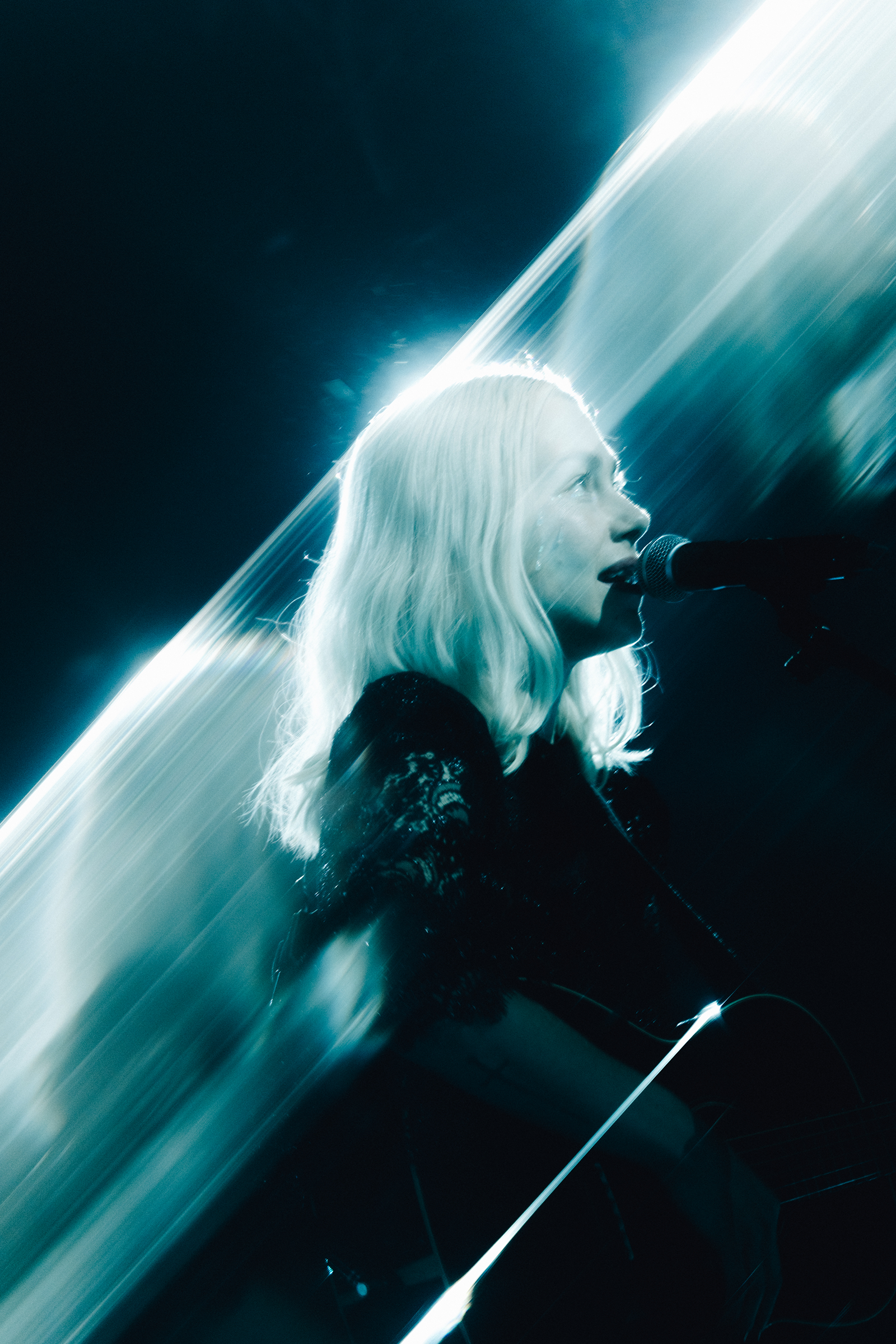
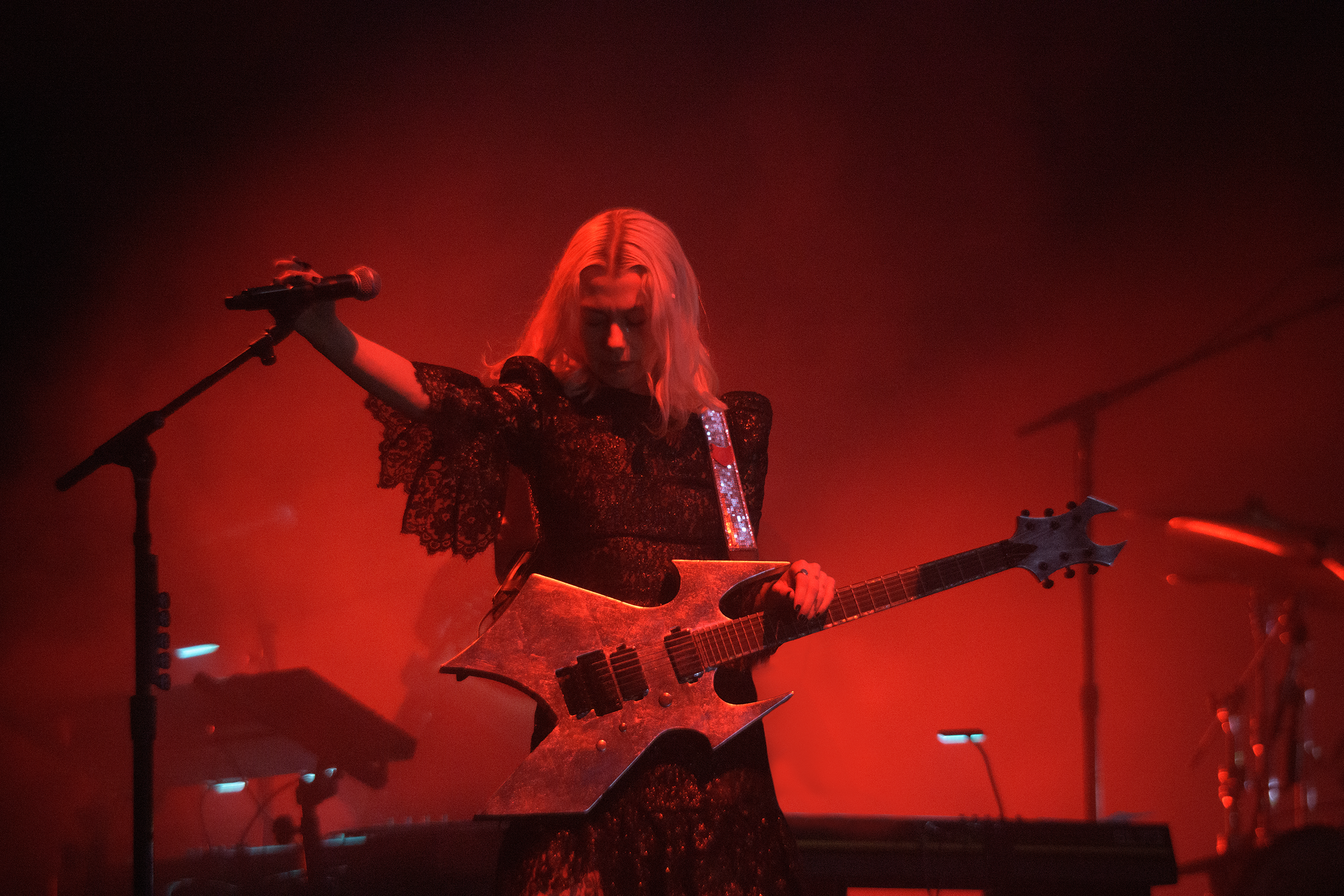
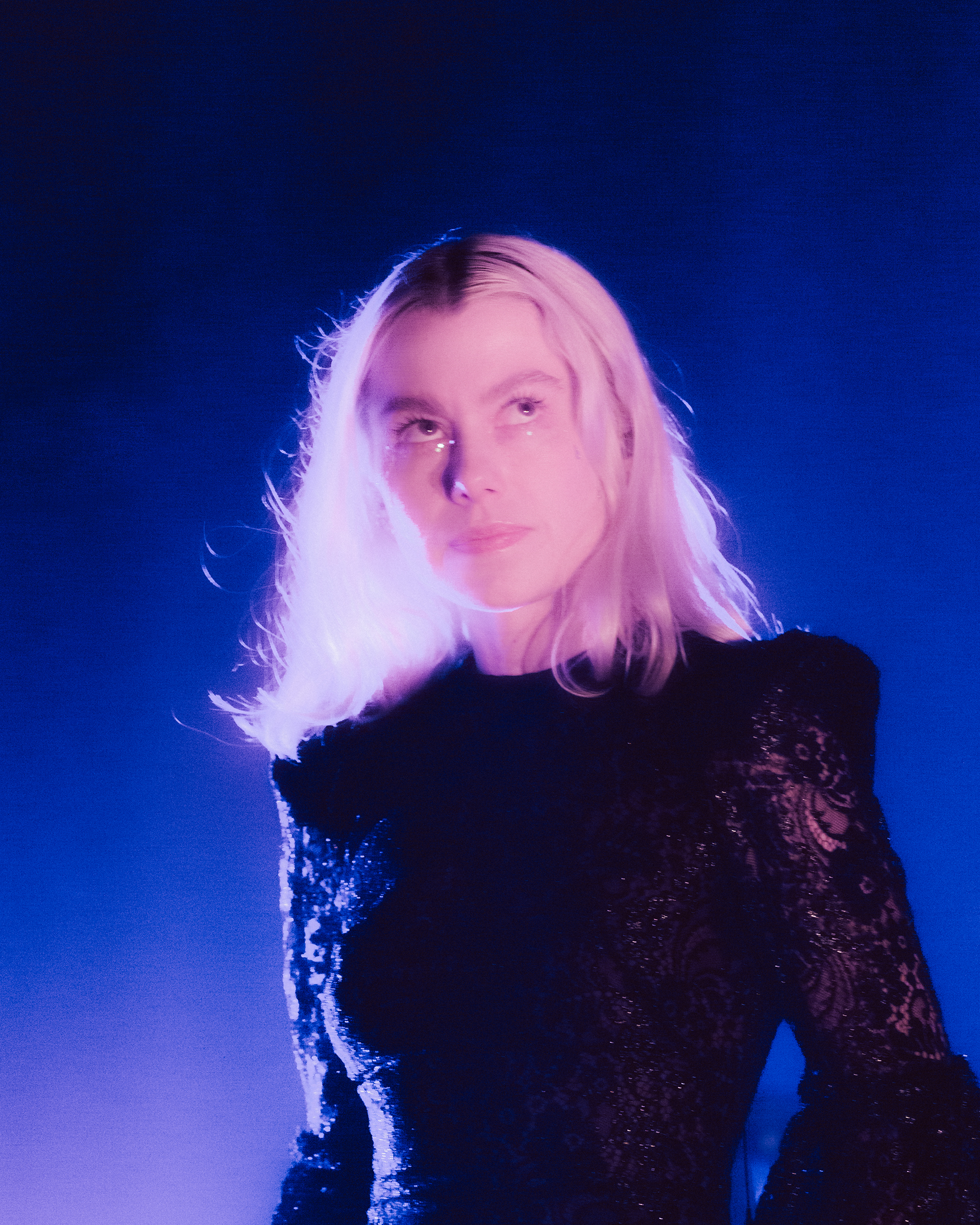
From a presentation and performance standpoint, The Lost Tour is and was breathtakingly professional in every way possible and I can’t stress this enough. The lighting alone is honestly worth discussing. The vibrant reds, blues and purples mixed with brilliant whites often converged to illuminate the stage from opposing directions, creating dramatic contrasts that seem perfectly calibrated to the emotional shifts in the music.
Overhead, an enormous UFO-esque dome rises into the air, becoming a visual centerpiece for images and lvideo loops with imagery of the moon and more that always felt perfectly connected to the songs being performed.
Photograph: Wes Ellis [ @atwes ]
It’s a tour with a striking production in every was possible; ambitious without feeling excessive, theatrical without overwhelming the person at its center and just as importantly, the sound is absolutely incredible. The clarity of the sound mix brings out details in Lost Weekend that are easy to overlook on the album, while giving the louder moments an almost physical impact.
Early in the evening, “Kill Me” moving directly into “The Governor’s Waltz” was one of those perfectly executed transitions that reminds you how much thought has gone into the pacing of the show.
Then later in the evening came the song “On Video” – let’s talk about it. I had admittedly not heard the song before show, and it ended up being one of my biggest surprises of the entire night. This song was considerably louder and more forceful than I expected, an absolutely huge-sounding song that revealed another compelling side of Bridgers’ music and genuinely hope it’s a soundscape she continues exploring, even if only occasionally.
Photograph: Matt Grub [ @mattgrubb.americas.waffle ]
Despite the number of songs performed and time spent transitioning between two separate stages, appropriately named “Above” and “Below,” the entire show and perfomrnace went by very quickly. The smaller, circular “Below” stage was capable of rotating, offering a different sense of intimacy within an otherwise enormous arena production and providing one of the night’s most extraordinary visual moments.
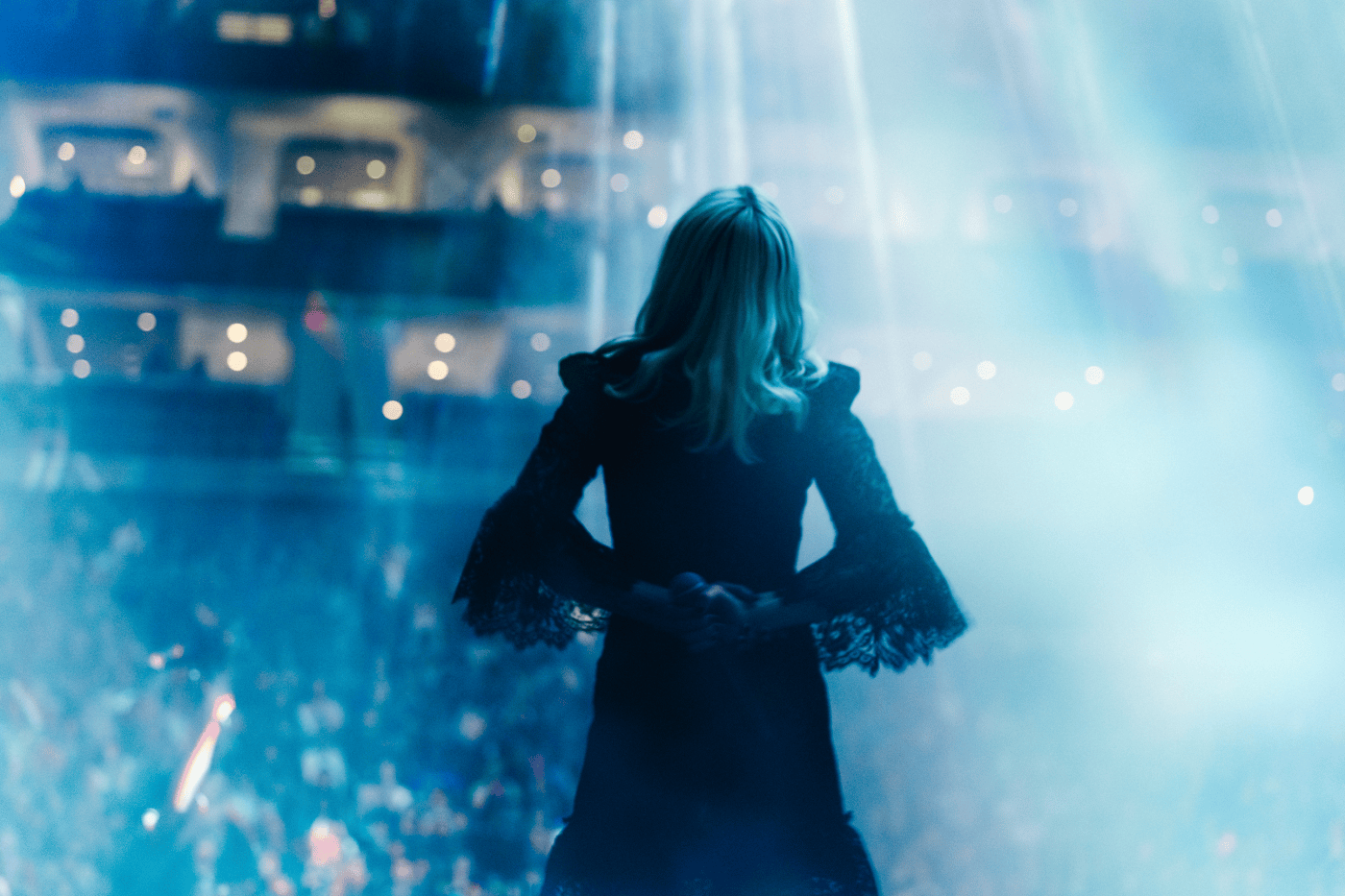
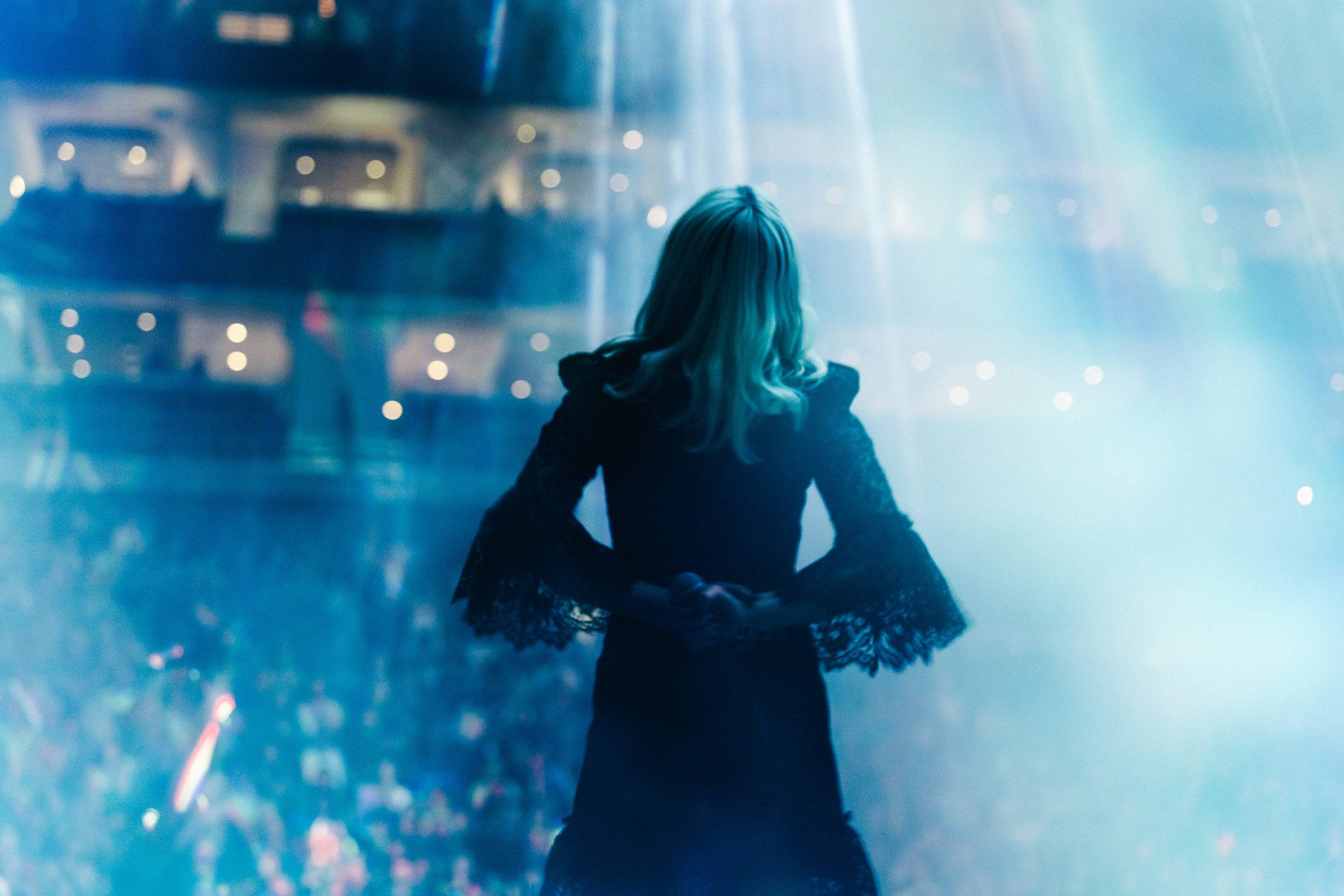
At one point, Bridgers stood beneath a concentrated beam of overhead light as smoke filled the illuminated space, creating what appeared to be a towering cylinder of light and haze extending above her. It was a simple concept executed beautifully; easily one of the most visually striking stage effects I’ve seen in some time.
From my perspective, the song “As Above” captured the essence of the entire night. Already one of my favorite songs from Lost Weekend, its live performance highlighted just how much Bridgers’ vocal approach has evolved and shines confidently currently. There are moments in the song that genuinely remind me of Björk, not in terms of imitation, but in the freedom and confidence with which she pushes her voice. Bridgers’ belts out a promise to make the seemingly impossible happen, and there’s something especially moving about hearing that sentiment expressed with such conviction against the song’s piano progression. That progression also brings to mind Nine Inch Nails’ often-overlooked “Right Where It Belongs,” particularly in the way something musically restrained can carry an enormous emotional weight. It’s an unexpected comparison, perhaps, but one that resonates with me.
That aspect part of what makes this stage of Bridgers’ career so compelling. She’s not simply recreating the sounds that first brought people to her music. She’s honestly expanding them, taking her influences and growth an artist and pushing it into something new, taking risks and allowing herself and material to grow
Of course, there was one specific moment that seemed almost destined to define the evening. When “I Know The End,” from Punisher, arrived as the night’s massive finale, the response was overwhelming. Thousands upon thousands of fans screamed alongside Bridgers at the top of their lungs, transforming an already cathartic song into something genuinely astonishing and incredibly loud. Spectrum Center reportedly accommodates roughly 18,500 to 19,000 people for concerts, depending on configuration, and from where I stood, I couldn’t see a single empty seat.
I mention this because I’ve seen negative commentary online questioning whether Phoebe Bridgers should be playing arenas in the first place. After witnessing this performance, that argument feels increasingly difficult to take seriously. I’ve been fortunate enough to see Bridgers perform several times through the years, going back to a very different point in her career. I understand the attachment people have to smaller venues, and there will always be something special about seeing an artist in a more intimate setting, however, artists change; audiences grow, music evolves both emotionally and sonically, and sometimes the scale of the actual live show needs to evolve with it.
Photograph: Wes Ellis [ @atwes ]
It isn’t 2018, or earlier, anymore – expecting Phoebe Bridgers to remain frozen in a particular moment of her career seems unfair to both the artist and the people who have connected with her music since then.
What makes The Lost Tour so successful isn’t simply that Bridgers can fill an arena. It’s that she’s found a way to make a performance of this size truly feel personal, intimate, emotionally honest, and visually extraordinary without sacrificing the qualities that made her music resonate in the first place. For all the supernatural aesthetics, UFOs, and otherworldly production surrounding the evening, the most powerful moments remained unmistakably human and real.
Phoebe Bridgers didn’t just confidently prove she can play arenas at Spectrum Center, she reminded everyone she’s absolutely earned the right to be there.

